
E-E-A-T Strategies Compared: 14 Methods to Prove Your Expertise to Google and AI
If you want your content to rank well and earn trust from both search engines and real readers, you need to prove your expertise, experience, authoritativeness, and trustworthiness. But with so many approaches available, how do you choose the right ones? This list compares 14 different strategies for building E-E-A-T, weighing their strengths, weaknesses, and trade-offs. Whether you’re a content creator, business owner, or marketer, you’ll learn which methods deliver the best results for your specific situation.
- Hiring Vetted Freelancers Through Legiit Versus Building an In-House Team
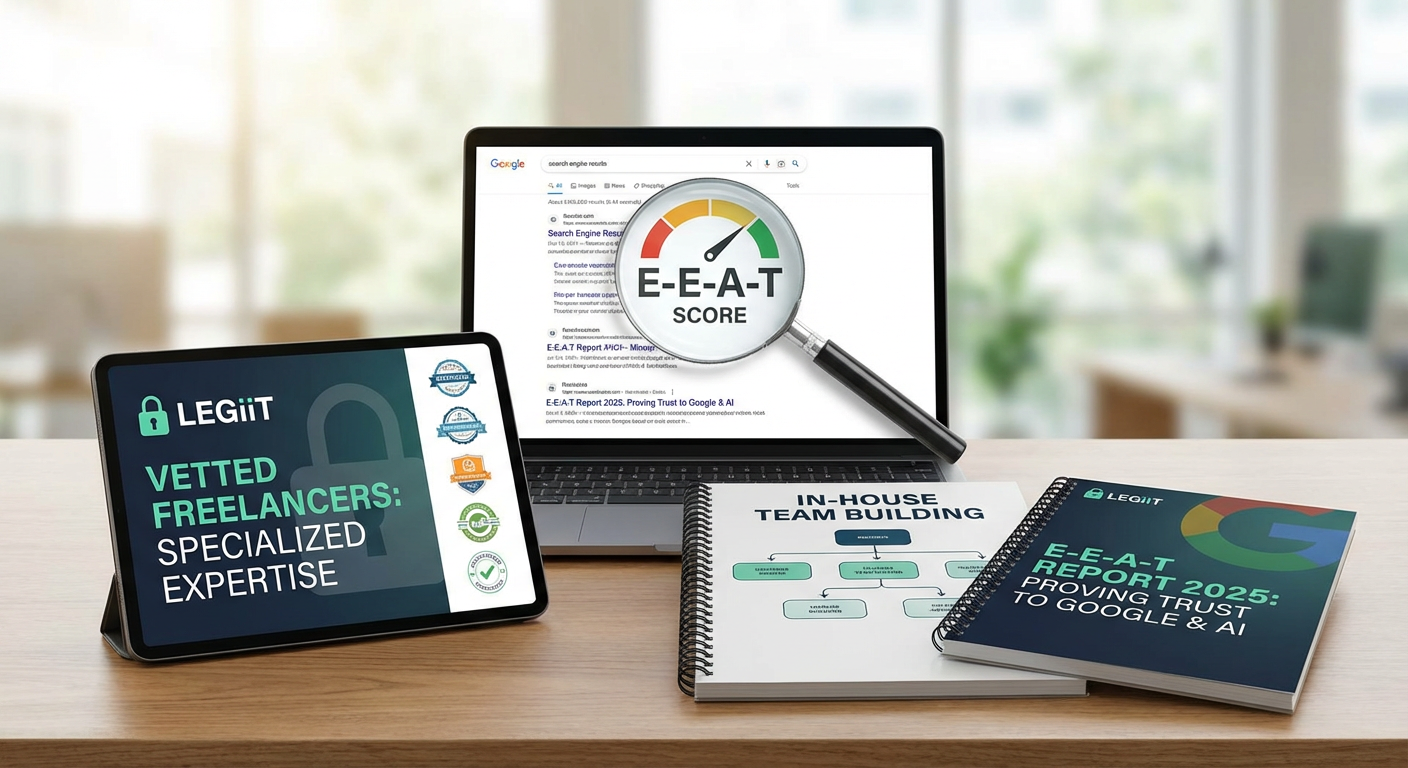
When you need expert content that demonstrates genuine authority, you face a choice between hiring freelancers or building an internal team. Legiit offers a middle path by connecting you with pre-vetted professionals who specialize in creating high-quality, authoritative content. The advantage here is speed and cost efficiency. You can access specialized talent without the overhead of full-time salaries, benefits, and training.
The trade-off is that freelancers may need more direction upfront to understand your brand voice and standards. However, many businesses find that working with experienced Legiit professionals who already understand E-E-A-T principles saves time compared to training junior staff. For smaller teams or those testing new content areas, this approach offers flexibility without long-term commitments.
- Author Bios with Credentials Versus Anonymous or Generic Bylines

Detailed author bios that list credentials, experience, and relevant qualifications signal expertise far better than generic bylines or no attribution at all. Search engines and readers both want to know who wrote the content and why they should trust that person. The upside is clear: named authors with real credentials build trust and improve rankings, especially for topics related to health, finance, or legal advice.
The downside is that this approach requires transparency. Some businesses prefer to keep authorship vague to avoid personnel changes affecting their content. But the evidence shows that transparent authorship consistently outperforms anonymous content. If your writers lack formal credentials, highlighting their practical experience and published work history can still add value, though it may not carry the same weight as recognized certifications or degrees.
- First-Person Case Studies Versus Third-Party Research Summaries
Publishing your own case studies based on real projects demonstrates experience in ways that summarizing other people’s research cannot. First-person accounts show you’ve done the work yourself, which is powerful for E-E-A-T. The benefit is authenticity and specificity. Readers and algorithms both recognize when someone is speaking from direct involvement rather than repeating information found elsewhere.
The limitation is that creating original case studies takes time and resources. You need actual projects, data collection, and often client permission to share results. Third-party research summaries are faster to produce and still provide value, but they position you as a commentator rather than a practitioner. For competitive niches, the investment in original case studies usually pays off through stronger trust signals and better rankings.
- Video Content with On-Camera Experts Versus Text-Only Articles
Video content featuring real experts speaking on camera adds a human element that text alone cannot match. Seeing and hearing someone explain concepts builds trust faster and provides proof that a real person with genuine knowledge stands behind the information. The advantage extends to AI systems that can now analyze video transcripts, speaker credibility, and viewer engagement metrics as trust signals.
The drawback is production complexity and cost. Quality video requires equipment, editing skills, and comfort on camera. Text articles remain easier to produce, update, and optimize for search. Many creators find success with a hybrid approach: core content in text form for accessibility and SEO, supplemented by video for high-value topics where demonstrating expertise visually makes a significant difference.
- Industry Certifications and Licenses Versus Self-Taught Expertise
Formal certifications, licenses, and academic credentials carry immediate weight with both readers and algorithms. They provide third-party validation of your knowledge and are especially important in regulated fields. The benefit is instant credibility. When you can display recognized credentials, you bypass much of the skepticism that self-taught experts face.
However, certifications cost money and time to obtain. In rapidly changing fields like digital marketing or technology, formal credentials may lag behind current best practices. Self-taught experts with strong portfolios and documented results can still build authority, but they’ll need to work harder to prove themselves. The best strategy often combines formal credentials where available with ongoing evidence of practical application and results.
- Publishing on Your Own Site Versus Contributing to Established Publications
Owning your content on your own domain gives you complete control and direct SEO benefits. Every piece strengthens your site’s authority over time. The upside is that you build equity in your own platform and maintain full editorial control. All traffic, backlinks, and authority signals flow to your property.
Guest posting on established, high-authority publications provides immediate credibility through association. Being published on respected industry sites signals to Google and readers that others vouch for your expertise. The trade-off is that you’re building someone else’s platform and may face editorial restrictions. A balanced approach involves maintaining your own content hub while selectively contributing to authoritative external sites to expand reach and borrow credibility.
- Frequent Content Updates Versus Creating Evergreen Resources
Regularly updating your content shows search engines that your information stays current and that someone actively maintains accuracy. This approach works well for topics that change frequently, like technology news or regulatory updates. The benefit is freshness signals that can boost rankings and demonstrate ongoing expertise.
Creating comprehensive evergreen resources that need minimal updates can be more efficient long-term. These pieces continue delivering value and rankings for months or years without constant attention. The challenge is that truly evergreen topics are limited, and even stable subjects sometimes require updates. Most successful strategies blend both approaches: core evergreen content that establishes authority, supplemented by timely updates and new pieces that demonstrate current engagement.
- Detailed About Pages Versus Minimalist Company Information
Comprehensive About pages that detail your background, team credentials, and company history provide strong trust signals. They give both users and search engines the context needed to evaluate your authority. The advantage is transparency. When people can verify who you are, where you’re located, and what qualifies you to speak on your topics, trust increases significantly.
Some brands prefer minimal About pages for aesthetic or privacy reasons. This approach can work for personal brands or creative industries where the work speaks for itself. However, for most niches, especially those involving advice, recommendations, or transactions, detailed About pages consistently outperform minimal ones. The small investment in creating thorough company information pages typically yields measurable improvements in user trust and search performance.
- Responding to Comments and Questions Versus Broadcast-Only Content
Actively engaging with your audience through comment responses, Q&A sessions, and community interaction demonstrates ongoing expertise and builds relationships. This two-way communication shows you’re accessible and genuinely knowledgeable, not just publishing content and disappearing. The benefit includes both direct trust building with your audience and behavioral signals that search engines notice.
The time commitment can be substantial, especially as your audience grows. Broadcast-only content is more scalable since you publish without ongoing engagement obligations. However, sites with active, moderated discussions typically see better user metrics like time on site and return visits. A practical middle ground involves responding to comments on key pieces while moderating or limiting comments on less important content.
- Linking to High-Authority Sources Versus Keeping Users on Your Site
Citing authoritative external sources strengthens your content’s credibility by showing you’ve researched thoroughly and can support your claims. This practice signals to search engines that you’re providing well-researched information, not just unsupported opinions. The upside is increased trustworthiness and better context for your claims.
The concern is that external links may send visitors away from your site. Some publishers avoid outbound links to maximize time on page. However, data shows that well-researched articles with quality citations typically perform better overall. The links demonstrate confidence in your content and respect for your readers’ ability to verify information. Strategic linking that opens in new tabs can balance these concerns while maintaining trust signals.
- Transparent Affiliate Disclosures Versus Undisclosed Partnerships
Clear disclosure of affiliate relationships, sponsorships, and partnerships builds trust even though it might seem counterintuitive. When you’re upfront about commercial relationships, readers appreciate the honesty and regulatory bodies stay satisfied. Search engines also favor transparent sites over those that hide their monetization methods. The advantage is long-term credibility and compliance.
Some worry that disclosures reduce conversion rates or make content seem biased. Research suggests the opposite: readers trust transparent recommendations more than those with hidden agendas. Undisclosed partnerships risk penalties from both regulators and search engines, potentially destroying your site’s reputation overnight. The minimal effort required for clear disclosures offers massive protection against trust and ranking damage.
- Original Research and Data Versus Curated Information
Publishing original research, surveys, or data analysis positions you as a primary source rather than an interpreter. This approach generates backlinks naturally as others cite your findings, and it demonstrates serious investment in your field. The benefit is authority that’s hard to replicate. Original data makes you a destination rather than one voice among many.
The investment required is significant. Conducting valid research demands methodology knowledge, time, and often money for tools or participants. Curating and synthesizing existing information is faster and still provides value to readers who appreciate having information organized and explained. For most creators, occasional original research combined with high-quality curation offers the best balance between resource investment and authority building.
- Niche Specialization Versus Broad Topic Coverage
Focusing deeply on a narrow niche makes it easier to demonstrate true expertise. You can cover topics comprehensively, build a reputation as the go-to source, and compete effectively even with limited resources. The advantage is becoming known for something specific, which both readers and algorithms reward with trust and rankings.
Broad coverage across multiple topics can attract more traffic and serve diverse audience needs. The trade-off is diluted expertise signals. It’s harder to prove authority across many subjects than within one focused area. Sites attempting broad coverage often struggle to rank competitively for any single topic. Starting narrow and expanding gradually as you build authority typically succeeds better than launching with wide coverage from the start.
- Schema Markup for Author and Organization Versus Basic HTML
Implementing structured data markup for authors, organizations, and content types helps search engines understand and display your expertise signals clearly. Schema markup makes your credentials, affiliations, and content relationships machine-readable. The benefit is clearer communication with search algorithms and potential rich results in search listings.
Adding schema requires technical knowledge or developer time. Basic HTML content still ranks if the underlying expertise is solid, so schema alone won’t compensate for weak content. However, when competing against similar quality content, proper schema markup can provide the edge needed to rank higher. Most modern content management systems offer plugins or tools that simplify schema implementation, reducing the technical barrier considerably.
Building genuine E-E-A-T requires choosing strategies that match your resources, audience, and goals. No single approach works perfectly for everyone, which is why understanding the trade-offs matters. Some methods like detailed author bios and transparent disclosures are relatively easy wins with minimal downside. Others like original research require significant investment but can establish authority that competitors struggle to match. Start with the approaches that fit your current situation, then gradually expand your E-E-A-T signals as your site grows. The key is consistency and authenticity. Search engines and readers both reward genuine expertise over superficial attempts to game the system.
Recent Comments