

7 Practical Ways to Use User-Generated Content That Drive Sales
If you want to boost sales without spending a fortune on advertising, user-generated content is your answer. Real customers sharing real experiences create trust that no polished ad campaign can match. This guide gives you actionable steps to collect, display, and profit from seven powerful types of user-generated content. Whether you run an online store, a service business, or a digital platform, these practical tips will help you turn customer voices into revenue.
- Hire Freelancers to Help You Collect and Organize User Content on Legiit

Managing user-generated content takes time, and most business owners don’t have enough of it. Legiit connects you with skilled freelancers who specialize in gathering testimonials, organizing reviews, creating social media graphics from customer posts, and building systems to automate content collection. You can find writers who will reach out to your customers for feedback, designers who will turn those testimonials into shareable images, and virtual assistants who will manage the entire process.
Start by posting a project on Legiit describing exactly what you need. Be specific about your goals, whether that’s collecting 50 video testimonials, creating a review management system, or designing Instagram story templates for customer posts. Browse freelancer profiles to find someone with experience in your industry. Many freelancers on the platform offer packages specifically for user-generated content campaigns, making it easy to get started without building everything from scratch yourself.
- Turn Customer Photos Into Shoppable Gallery Pages
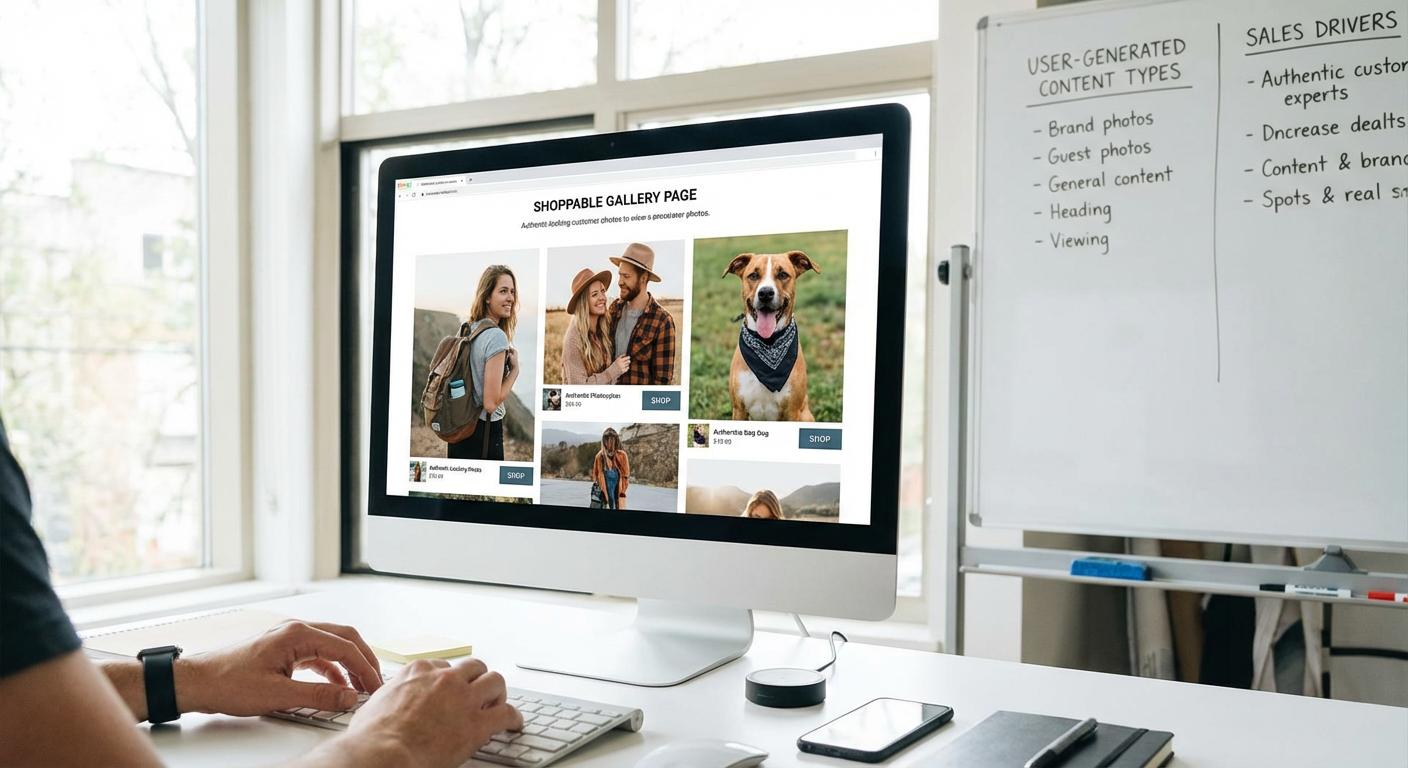
When customers post photos of themselves using your products, those images become powerful sales tools. The practical approach is to create dedicated gallery pages on your website where these photos link directly to product pages. This turns browsing into buying with minimal friction.
Here’s how to do it right. First, ask customers for permission to feature their photos. A simple email or direct message works fine. Most people feel honored to be featured and will happily agree. Next, use tools like Pixlee, Yotpo, or even a simple WordPress gallery plugin to display these images. Tag each photo with the products shown and add direct purchase links. Place these galleries on product pages, your homepage, and in email campaigns. Track which customer photos generate the most clicks and sales, then feature similar content more prominently. Update your galleries regularly so repeat visitors see fresh content. This approach works particularly well for fashion, home decor, food products, and anything visually appealing.
- Create a Simple System for Collecting Video Testimonials
Video testimonials convert better than written reviews because they feel more genuine and harder to fake. The challenge is getting customers to record them. Make it easy with a simple system that removes all barriers.
Send an email to satisfied customers with a direct link to a video upload platform like Bonjoro, Testimonial.to, or even a private YouTube upload link. In your email, include three specific questions you want them to answer. Keep it to 60 seconds or less. Questions like “What problem did our product solve for you?” and “What would you tell someone considering buying this?” work well. Offer a small incentive like a discount code or entry into a monthly drawing. Once you have videos, place them strategically. Put the strongest testimonial on your homepage above the fold. Add relevant testimonials to product pages where they address common objections. Include them in abandoned cart emails to bring hesitant buyers back. Test different lengths and styles to see what resonates with your audience.
- Build a Review Collection Campaign That Actually Works
Written reviews remain one of the most reliable types of user-generated content for driving sales, but only if you have enough of them. A single five-star review doesn’t move the needle. You need volume and consistency.
Set up an automated email sequence that asks for reviews at the perfect moment. For physical products, send the request seven to ten days after delivery, giving customers time to use the item. For services, send it immediately after project completion while the experience is fresh. Keep your request simple and direct. Don’t apologize for asking or write three paragraphs explaining why reviews matter. Just say “How did we do? Leave a review” with a clear link. Make the review process as frictionless as possible. If you can, send customers directly to the review form with their order information pre-filled. Respond to every review, both positive and negative, within 48 hours. This shows potential customers that you care and pay attention. When you get detailed positive reviews, highlight specific phrases in your marketing materials, on product pages, and in social media posts.
- Launch a Branded Hashtag Campaign With Clear Instructions
A branded hashtag gives you an organized stream of user-generated content while building community around your brand. The mistake most businesses make is creating a hashtag and hoping people use it. That rarely works.
Create a hashtag that’s short, memorable, and clearly connected to your brand. Then give customers specific reasons and instructions to use it. Run a monthly contest where the best post with your hashtag wins a prize. Feature user posts on your social media accounts and tag the creators. Send customers a card with their purchase that says “Share your experience with #YourHashtag and we’ll feature you on our page.” Make it visual with a QR code that takes them directly to Instagram or TikTok with the hashtag pre-populated. Track your hashtag weekly and engage with every post. Like, comment, and share generously. Save the best content to use in ads, on your website, and in email campaigns. The key is consistency. A hashtag campaign builds momentum slowly, but once it catches on, you’ll have a constant stream of authentic content that costs you nothing to produce.
- Convert Customer Success Stories Into Case Study Content
Case studies work especially well for service businesses, B2B companies, and high-ticket products where buyers need more convincing. The format allows you to tell a complete story with measurable results.
Identify your best customer success stories by looking at who achieved the most impressive results or who represents your ideal customer profile. Reach out and ask if they’d participate in a case study. Most will agree if you make the process easy. Send them a simple questionnaire with questions about their situation before using your product, why they chose you, how they implemented your solution, and what results they achieved. Use specific numbers whenever possible. A case study that says “increased revenue by 43% in three months” performs better than vague claims. Format your case studies with clear sections including the challenge, the solution, and the results. Add pull quotes, photos of the customer, and graphs showing improvement. Publish these on a dedicated case studies page, but also repurpose sections for social media, email campaigns, and sales presentations. Update your case studies periodically as customers achieve new milestones.
- Feature Customer Unboxing Videos and How-To Content
Customers who create unboxing videos or tutorials using your products are giving you gold. This content shows your product in real-world conditions and helps potential buyers visualize ownership.
Monitor YouTube, TikTok, and Instagram for customers posting this type of content. When you find quality videos, reach out to the creators and ask permission to share their content. Most creators appreciate the exposure and will gladly agree. Embed these videos on your product pages alongside your official marketing videos. Potential customers trust peer-created content more than branded content. Create a section on your site called “How Customers Use Our Products” or “Real Customer Videos” and update it monthly. You can also incentivize this behavior by running campaigns specifically asking customers to post unboxing or tutorial content. Offer a reward for the best video each month. For physical products, include a small card in your packaging encouraging customers to film their unboxing and tag your brand. Provide clear instructions on what you’d love to see in their video. The more specific your request, the better the content you’ll receive.
User-generated content works because it replaces your sales pitch with genuine customer voices. The key is having systems in place to consistently collect, organize, and display this content where it matters most. Start with one type of user-generated content from this list, build a reliable process around it, and then expand to others. Track what drives the most engagement and sales, then double down on those formats. Remember that authenticity matters more than polish. A grainy customer photo often outperforms a professional studio shot because it feels real. Keep your requests simple, make participation easy, and always thank customers who contribute. With these practical approaches, you’ll build a library of compelling content that turns browsers into buyers.
Recent Comments